Pipe leaks & burst pipes
Water from household piping can spread into nearby cabinets, walls and flooring. Once the source is controlled, cleanup focuses on the areas and materials the water reached.
Indoor leaks & overflows
Water from a pipe, appliance or fixture can move beyond the visible puddle. Explore extraction, moisture assessment, drying and cleanup for supported indoor water sources.
The work in more detail
The source, affected materials and moisture remaining underneath surfaces determine the cleanup and drying approach.
Water from household piping can spread into nearby cabinets, walls and flooring. Once the source is controlled, cleanup focuses on the areas and materials the water reached.
A washing machine, dishwasher, sink or other supported indoor fixture can release water into an adjoining room. The source and exposure influence how affected surfaces are handled.
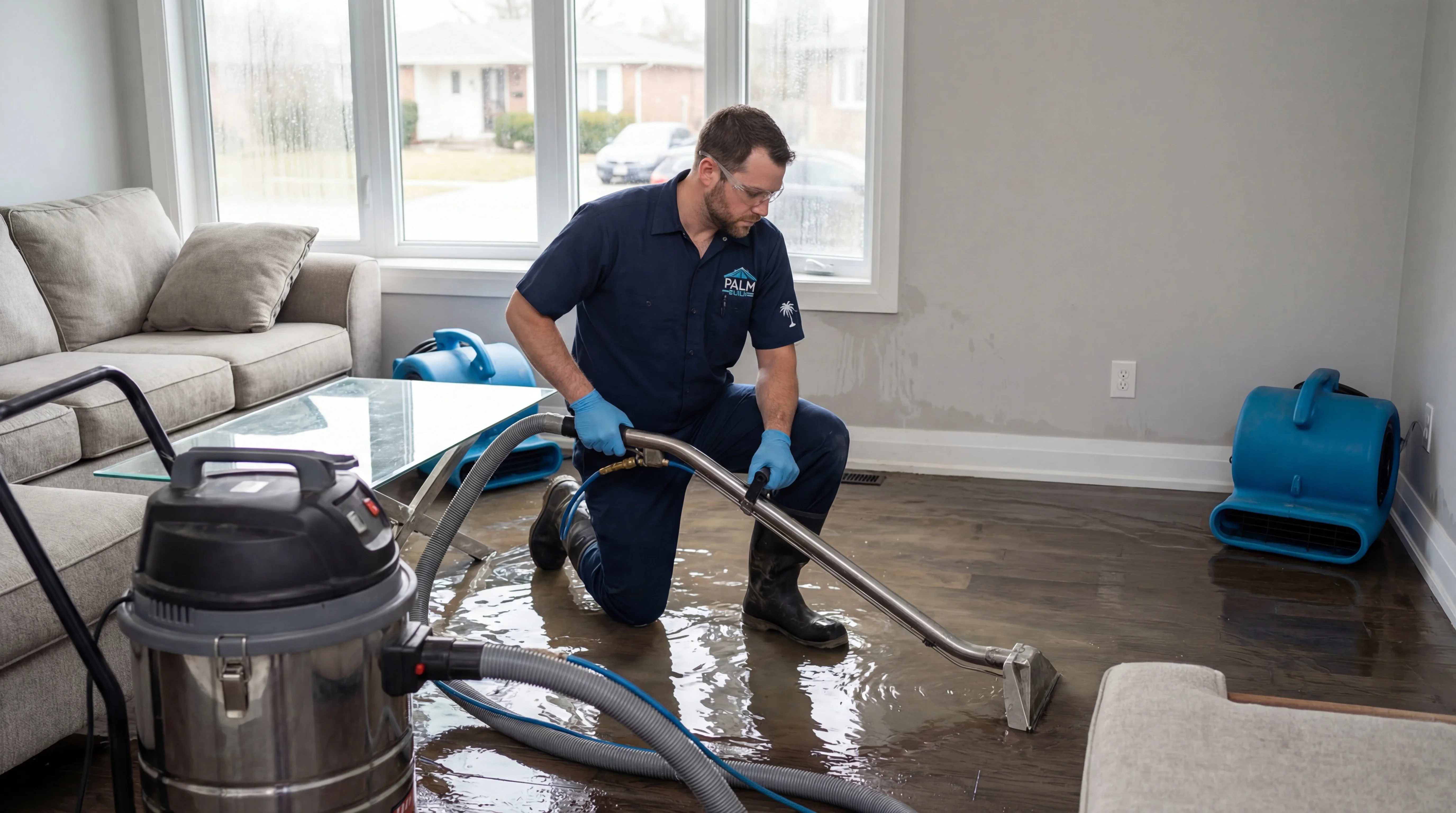
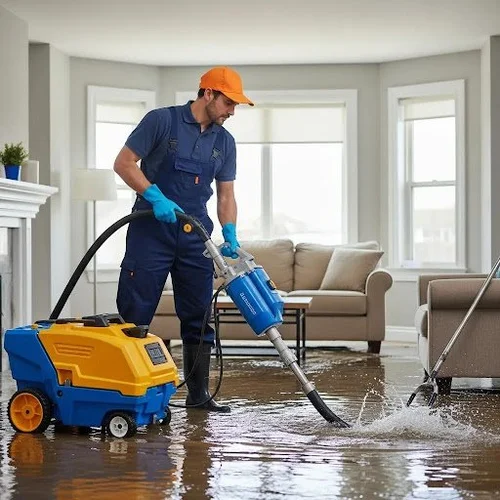
Extraction equipment removes accessible water from flooring and other affected surfaces. Removing this water reduces the amount left for the drying equipment to manage.
Moisture checks help locate affected materials. Air movers encourage evaporation while dehumidification removes moisture from the air, with placement adjusted to the room.
Material type, water source and time wet influence cleaning and recovery. Some materials may be dried in place; others may require removal within the provider’s service scope.
Call about supported water extraction, drying and cleanup.
The room beyond the wet surface
Water can move below flooring, into baseboards and along adjoining wall materials. A room that looks dry may still have moisture held beneath the surface.
The drying plan depends on the materials and measured conditions. Equipment may need to run and be adjusted until readings indicate sufficient progress, rather than stopping when the room feels dry.
Useful at home
When safe, stop the indoor water source. Source repair and cleanup can be separate service scopes.
Stay away from wet outlets, appliances and areas where water may have reached electrical systems.
Avoid assuming that a dry-looking surface means flooring or wall materials have fully dried.
Common questions
Yes. It can move along flooring, beneath surface materials and through nearby wall areas. Moisture assessment helps establish the affected area.
An air mover directs airflow across damp surfaces. A dehumidifier removes moisture from the air, supporting continued evaporation from affected materials.
No. The source, material condition, exposure and time wet affect whether drying and cleaning are suitable or removal is needed.
No single duration applies. The materials, amount of water, access, humidity and moisture readings determine how drying progresses.
Residential service connections
Call for supported pipe leaks, burst pipes, appliance overflows or fixture overflows.
Call (815) 814-3958